
Planning a Babymoon in Barbados: A Trimester-by-Trimester Guide
A babymoon is the trip couples take between the end of the first trimester and the final stretch before a baby arrives — one last getaway with just the two of you, before the schedule changes for good. Barbados turns out to be an unusually good fit for it: short flights from most of the US and UK, calm west-coast water for easy swimming, reliable healthcare on-island if you ever need it, and a slower pace that suits rest better than a packed sightseeing itinerary. Here's how to plan one well, trimester by trimester, and where a prenatal massage fits into the week.
Why Barbados Works Well for a Babymoon
A few practical things make Barbados an easier choice for a pregnancy trip than many other Caribbean islands. Flight times are short relative to the rest of the Caribbean for most North American and UK travelers, which matters more during pregnancy than it did before — less time sitting still, less cabin-air dehydration, less overall fatigue to recover from on arrival. The west coast in particular offers calm, gentle water rather than the rougher Atlantic swell on the east side, which makes swimming and wading genuinely relaxing rather than something to brace against. The island also has a modern hospital (the Queen Elizabeth Hospital) and private clinics in Bridgetown, which is worth knowing even if you never need them — it's one less thing to worry about being far from. And because Barbados is small, there's no pressure to cover ground; a babymoon here can be built almost entirely around staying in one place and doing very little, which is exactly what most expecting couples actually want from the trip.
Timing Your Trip by Trimester
First trimester (weeks 1–13): Most doctors and airlines are comfortable with flying in the first trimester, but this is also the window with the highest natural miscarriage risk and the most unpredictable nausea and fatigue, which makes it a harder trimester to enjoy a trip in rather than simply endure it. Most couples who travel during this window keep plans loose and build in far more rest than they think they'll need.
Second trimester (weeks 14–27): This is the trimester most babymoons are built around, and for good reason. Energy levels are typically at their highest of the whole pregnancy, morning sickness has usually passed, and the bump is visible but not yet large enough to limit movement, flying comfort, or how long you can comfortably sit through a flight. If you have flexibility on when to travel, this is the window to aim for.
Third trimester (weeks 28 and beyond): Still possible, but with real constraints. Most airlines restrict flying somewhere between 28 and 36 weeks depending on the airline and whether the pregnancy is singleton or multiple — check your specific airline's policy well ahead of booking, since they vary more than people expect. Comfort also drops noticeably: longer flights get harder, swelling in the legs and feet is more pronounced, and a doctor's note confirming you're fit to fly is sometimes required this late. If a third-trimester trip is the only option, build in shorter flight segments if you can, and expect to move more slowly once you're on the ground.
Building a Low-Key Itinerary
The instinct on any trip to a beautiful island is to fill the days — a catamaran cruise, a hike to Bathsheba, a full day of snorkeling. A babymoon works better with roughly half that ambition. A few things that suit pregnancy particularly well:
Calm-water swimming and wading, rather than snorkeling trips or paddleboarding that involve a lot of balance and exertion. The west coast beaches around Holetown and Paynes Bay are ideal for this — flat, warm, shallow close to shore.
Short, flat walks rather than the east coast's uneven hiking terrain. A slow morning walk through Holetown or along a quiet beach covers the "let's actually explore a little" urge without overdoing it.
A private villa or quiet condo over a large, busy resort, if you have the choice. Beyond the extra space, it means no stairs to a shared pool, no walking across hot resort grounds for amenities, and nowhere to be at a fixed time. A villa or in-room setup also makes it far easier to build genuine rest into the schedule, since nothing requires getting dressed and going anywhere.
One or two anchor plans per day, maximum, with long unscheduled stretches in between. Pregnancy fatigue doesn't always announce itself in advance, and an overbooked day leaves no room to simply stop and rest when it does.
Where a Prenatal Massage Fits Into the Week
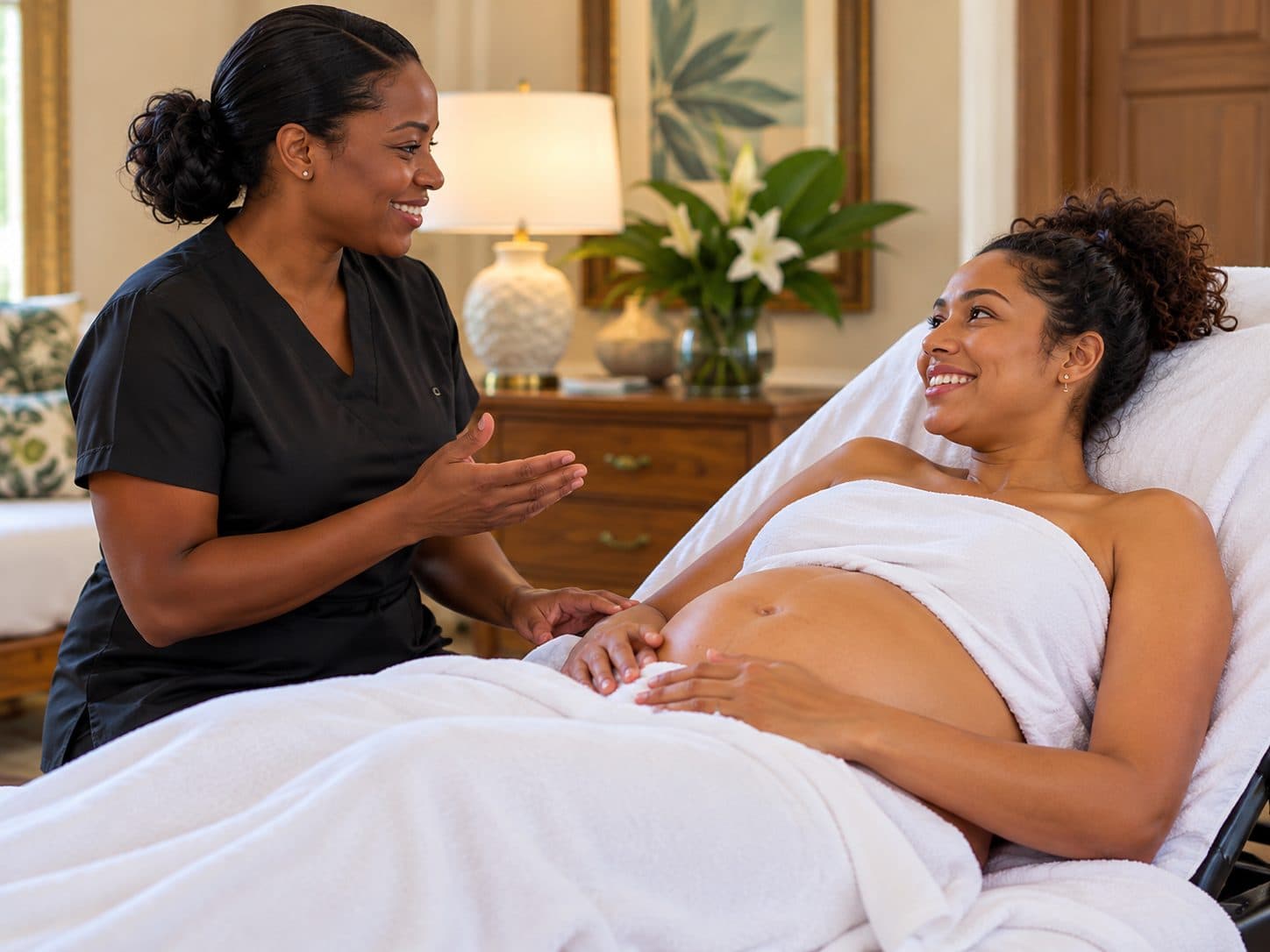
A dedicated prenatal massage is one of the easiest, highest-value things to build into a babymoon, and timing it well makes a real difference. As a standard precaution, we wait until after the first trimester — generally around week 12 to 13 — before booking, regardless of how the trip is timed, so a second-trimester babymoon lines up naturally with when prenatal massage is appropriate to begin with.
Within the trip itself, many couples build it in around the midpoint of the stay rather than the first or last day — early enough to still get the benefit for the rest of the week, late enough that you've settled in and aren't rushing straight from the airport. The session itself uses lighter pressure throughout than a standard massage, avoids the abdomen entirely, and focuses on the areas that carry the most pregnancy-related tension: lower back, hips, shoulders and feet. It's performed only by a therapist specifically trained in prenatal technique, and it comes to wherever you're staying — villa, hotel, condo or Airbnb — so there's no need to travel anywhere while pregnant and already a little more tired than usual.
If Your Partner Wants to Book Too
A babymoon is still a trip for two, and your partner doesn't have to sit out the spa portion of it. A standard Swedish or deep tissue session can run alongside your prenatal massage — two therapists, two tables, side by side — so you both get a proper treatment at the same time rather than taking turns. Just mention when you book that one session needs to be the prenatal version, and we'll pair you with a therapist trained for it while your partner books whichever style they prefer.
A Few Practical Things to Sort Before You Go
Travel insurance that covers pregnancy is worth checking carefully — not every policy automatically does, and the details (cutoff week, what's covered if you go into labor early) vary a lot between insurers.
A note from your doctor, especially in the second half of the trimester range, confirming you're cleared to travel. Some airlines ask for one as a matter of course past a certain week; others don't ask but it's still sensible to have for your own peace of mind.
A realistic buffer for how you'll feel, both on travel days and during the trip itself. Pregnancy fatigue doesn't follow a predictable schedule, and the easiest babymoons are the ones where nothing is so tightly booked that there's no room to simply rest when you need to.
Booking Your Prenatal Massage
Let us know you're pregnant when you book and roughly how far along you are, and we'll match you with a therapist specifically trained in prenatal technique and schedule accordingly. We serve the whole island at one flat rate with no travel surcharge, so wherever you're staying for the babymoon, the session comes to you.
Planning a babymoon? Reserve a prenatal session through our online booking form, or message us on WhatsApp at 1.246.850.0901. We operate 8am to 9pm, seven days a week, including public holidays, with most bookings confirmed within twenty to forty-five minutes.
Frequently Asked Questions
What's the best trimester to take a babymoon to Barbados?
The second trimester (roughly weeks 14–27) is usually best — energy is typically highest, morning sickness has usually passed, and most airlines have no restrictions yet on flying.
Can I fly to Barbados in my third trimester?
Often yes, but check your specific airline's cutoff — most restrict flying somewhere between 28 and 36 weeks, and some require a doctor's note confirming you're fit to fly as you get later in the pregnancy.
When during pregnancy can I book a prenatal massage?
We wait until after the first trimester, generally around week 12 to 13, as a standard precaution. There's no upper limit through the second and third trimesters — positioning and pressure are simply adjusted as the pregnancy progresses.
Can my partner get a massage at the same time as my prenatal session?
Yes — a standard Swedish or deep tissue session can run alongside your prenatal massage, with two therapists and two tables set up side by side wherever you're staying.
Is Barbados a safe destination for a pregnancy trip?
Barbados has a public hospital and private clinics in Bridgetown, and short flight times from most of the US and UK reduce the time spent sitting still compared to many other long-haul Caribbean or international options. As with any trip during pregnancy, check with your doctor and confirm your travel insurance covers it.
Does it cost more to book a prenatal massage than a regular one?
No — pricing is the same regardless of which type of session you book. Just mention you're pregnant and roughly how far along when you book so we can match you with the right therapist.
Barbados Mobile Spa
Ready for Your Spa Moment?
Book your in-room spa treatment in Barbados today.
Call: 1.246.850.0901·8am – 9pm, Sunday to Saturday