
Remote Work in Barbados: Why Deep Tissue Massage Belongs in Your Routine
Barbados has quietly become one of the Caribbean's most popular bases for people who work from a laptop rather than a desk at head office. The Barbados Welcome Stamp visa, introduced in 2020 and extended since, lets remote workers and their families live on the island for up to 12 months at a time, renewable, provided their income comes from outside Barbados. That's a very different stay from a one-week holiday, and it changes how a massage fits into the trip: not a single treat booked for the last afternoon, but something that can genuinely support a working routine for months at a stretch.
What a Working Stay Actually Does to Your Body
A beach view doesn't change what hours at a screen do to a body. Video calls still mean a forward-leaning neck, a laptop on a counter or a lap still means rounded shoulders, and a kitchen-table "desk" for three months straight tends to settle into the lower back in a way a week's vacation never has time to. Add a different mattress, a different chair, and the general habit of working longer hours than planned because the time zone back home runs late into the evening, and the tension that shows up is chronic rather than a one-off travel ache.
That's a meaningfully different problem from the jet-lagged stiffness a short-stay guest feels after a flight, which a Swedish massage handles well. Desk-related tension sits deeper and tends to concentrate in the same two or three spots session after session — upper back and neck from screen posture, lower back from an improvised chair, forearms and wrists for anyone typing for hours daily.
Why Deep Tissue Fits Better Than a Relaxation Massage
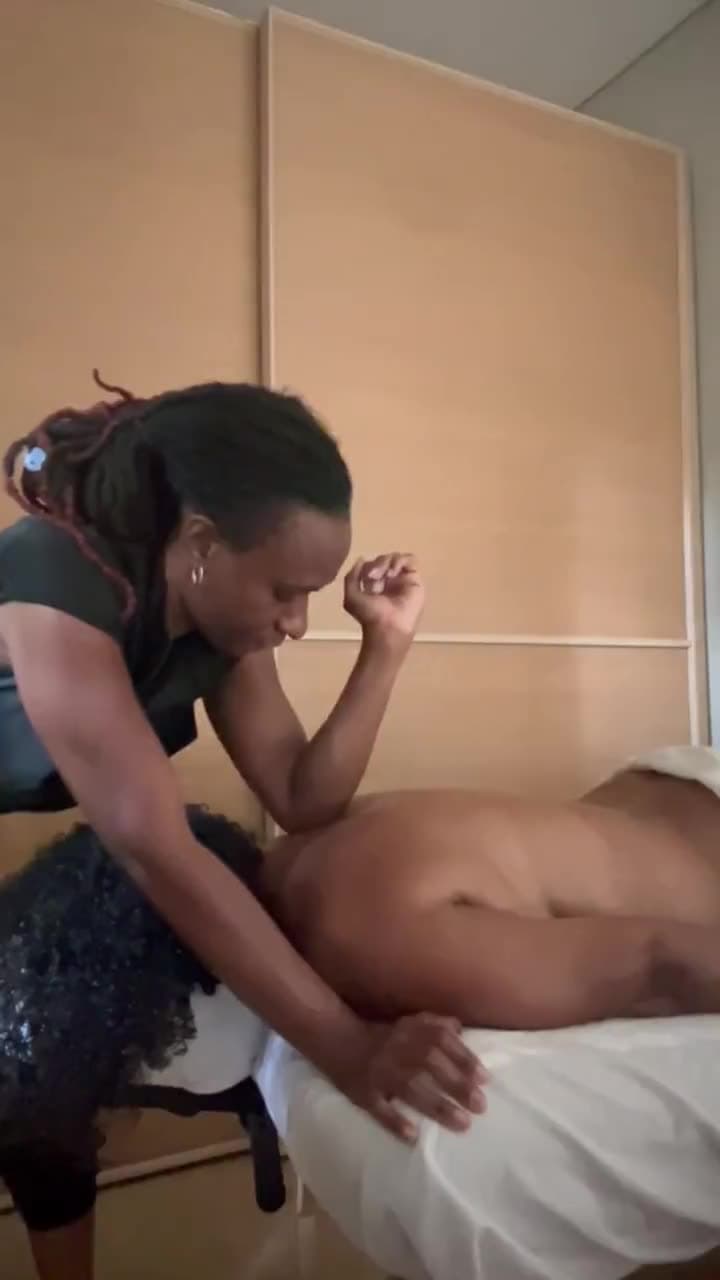
Deep tissue massage works slower and firmer than a classic relaxation massage, spending real time on two or three specific areas rather than spreading evenly across the whole body. That's exactly the shape of a desk-related problem: a tight band across the shoulders, a knot beside the shoulder blade, a lower back that's stiff from sitting rather than sore from a single injury. A lighter, full-body session can feel good without actually reaching the tissue that's held tension for weeks.
If you're genuinely unsure which to book, our Swedish vs. deep tissue comparison breaks down the difference in more detail — but as a general rule, if you could point to the exact spot that's tight, deep tissue is usually the better starting point, and every session still uses adjustable pressure so your therapist can ease off or go firmer as you go.
Treat It as a Routine, Not a One-Off Treat
The biggest shift for a longer stay is frequency. A guest on a one-week trip books once, maybe twice. Someone working from Barbados for a few months is better served by a repeating rhythm — weekly or every other week — the same way they'd think about a standing gym session or a physio appointment back home. Chronic desk tension responds far better to regular, moderate sessions than to one deep, intense one every few months. It's also simply more sustainable: a session that's part of a routine doesn't need to "fix everything" in one sitting, so your therapist can work a little at a time without next-day soreness interfering with a full day of calls.
Booking the same day and time each week (a quiet Friday afternoon once the week's calls wind down, for instance) also means less coordinating — you tell us once what's tight and your therapist already knows what to check on at the next session.
Fitting a Session Around a Workday
One advantage of a mobile therapist over a spa or gym appointment is that a session fits around your schedule rather than the other way around. Most remote workers staying longer-term build it into a natural break in the day: after wrapping up morning calls and before an afternoon that's lighter on meetings, or at the actual end of the working day rather than losing an evening to driving somewhere. If you're renting a villa with a dedicated workspace, the table can usually be set up on a covered patio or in a quiet room nearby without disturbing whatever's still open on your laptop. There's no need to block out a whole afternoon the way a day-spa visit would require — a 60-minute session comfortably fits inside a normal lunch break plus a few minutes either side.
What to Tell Your Therapist When You Book
Because the goal here is ongoing relief rather than a single relaxing hour, it helps to be specific when you book: which hand you type with, whether you're on video calls most of the day or mostly heads-down, and where exactly things are tight. Mention if you've switched to a less ergonomic setup than you have at home — most working travelers have — since that's usually the actual cause rather than anything about the island itself. Your therapist will ask about this anyway as part of the usual pre-treatment consultation, but coming in with an answer ready saves time and means more of the session goes toward actually working through it.
Booking for a Longer Stay
Whether you're here for a two-week trial run or a full 12 months under the Welcome Stamp, the booking process is the same simple online form, and pricing doesn't change based on how long you're staying or how often you book — one flat, island-wide rate applies to every session, with no travel surcharge wherever your workspace happens to be. If you know you'll want a standing weekly or biweekly slot, just say so when you book and we'll help you lock in a day and time that holds steady around your calendar.
Working from Barbados for a while? Reserve your first session through our online booking form, or message us on WhatsApp at 1.246.850.0901 to set up a standing appointment.
Frequently Asked Questions
How long can remote workers actually stay in Barbados?
Under the Welcome Stamp visa, an initial 12-month stay is typical, and it's renewable. It requires proof of income from outside Barbados (commonly cited at around US$50,000 a year) and a government application fee; check current requirements with Barbados's official immigration channels before applying, since rules can change.
Is it safe to book deep tissue massage every week?
Yes, for most people. Weekly or biweekly deep tissue sessions are a common pattern for ongoing, non-injury-related tension and tend to produce better long-term results than infrequent, more intense sessions. Mention any medical conditions when you book so your therapist can adjust accordingly.
Can a session fit around my work calls?
Yes — that's one of the main advantages of a mobile therapist over a day spa. Tell us your general schedule when you book and we'll help you find a day and time that doesn't clash with recurring meetings.
Do you come to co-working spaces, or only private accommodation?
We serve villas, hotels, condos and private homes island-wide. If you're working from a co-working space rather than where you're staying, let us know when you book and we'll confirm whether that location works for a mobile setup.
How is this different from a regular vacation massage booking?
The treatment itself is the same adjustable-pressure massage available to every guest. What differs is the approach: a standing, repeating booking aimed at a specific, recurring tension pattern rather than a single relaxing session booked once during a short trip.
Does pricing change for a standing weekly booking?
No — we apply one flat, island-wide rate per session length regardless of how often you book or how long you're staying in Barbados.
Barbados Mobile Spa
Ready for Your Spa Moment?
Book your in-room spa treatment in Barbados today.
Call: 1.246.850.0901·8am – 9pm, Sunday to Saturday