
Hot Stone Massage in Barbados, Delivered to Where You're Staying
Hot stone massage layers warmed basalt stones into traditional hands-on technique, using sustained heat to soften tight muscle so your therapist can work deeper with less pressure than a typical massage needs. TUTCH brings certified therapists and the stones, to your villa, hotel, condo, Airbnb or private residence anywhere in Barbados, so you get that same deep, grounding warmth without leaving your room.
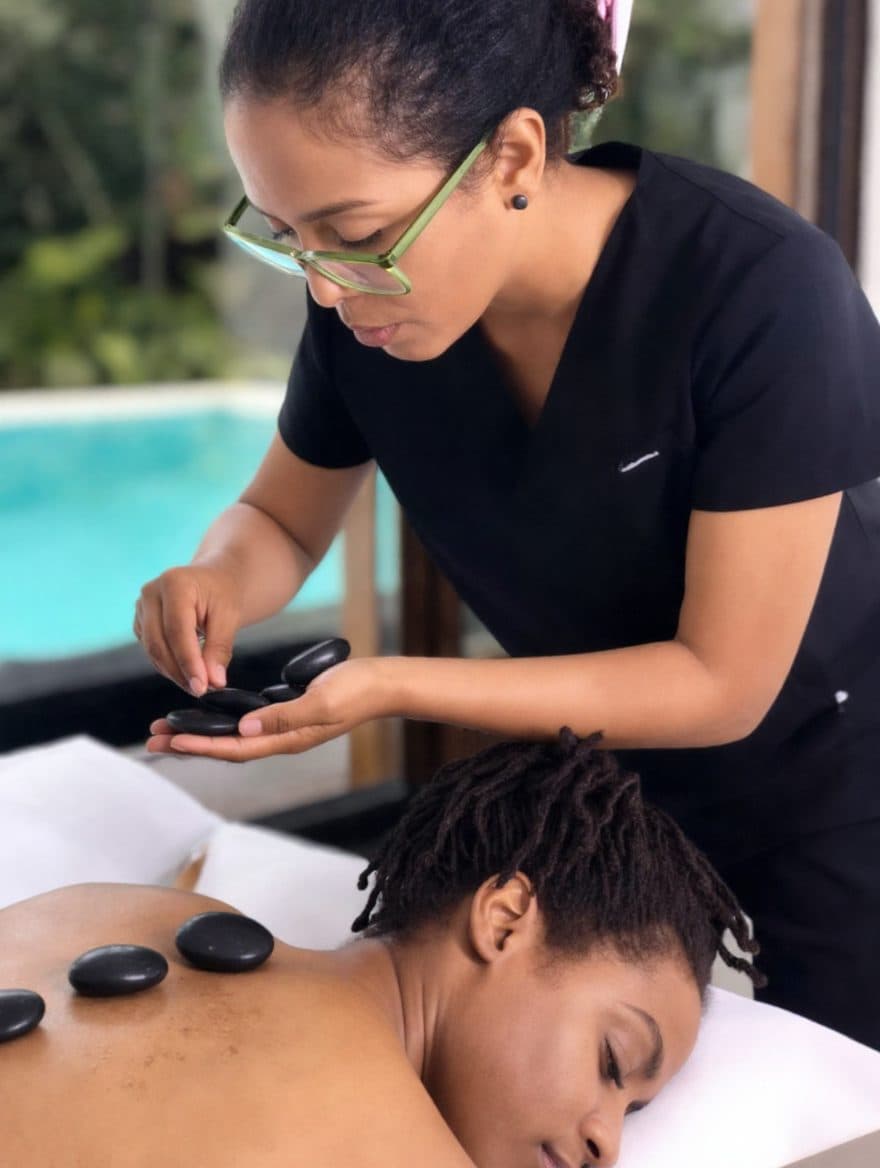
What hot stone massage actually involves
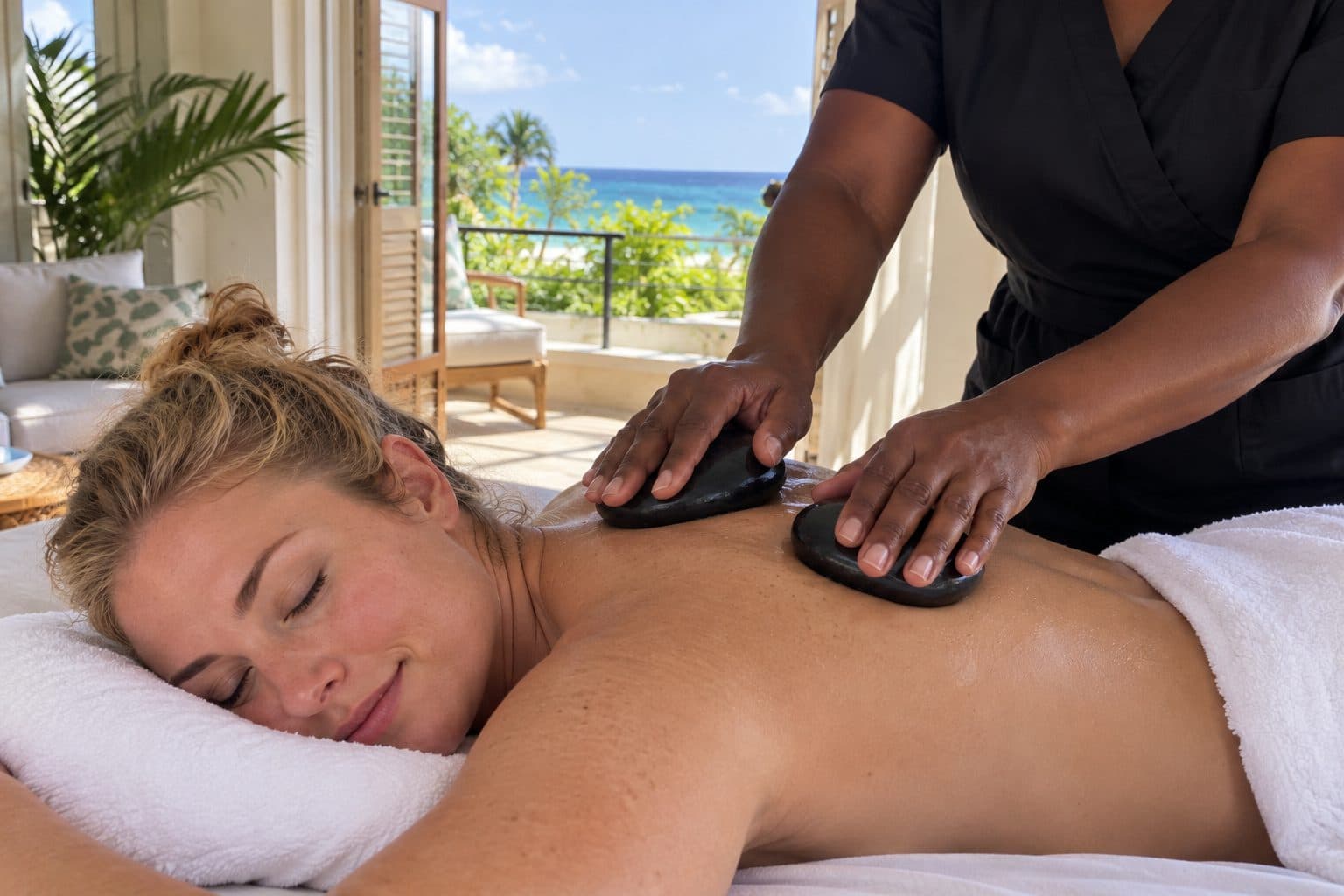
Smooth basalt stones are heated in water to a controlled, comfortable temperature, then oiled and worked into the same broad strokes used in a classic full-body massage — effleurage and petrissage, mainly — with the stones themselves doing some of the gliding and kneading in place of your therapist's hands. Basalt holds heat well and has a naturally smooth surface, which is why it's the standard choice for this technique over other stone types.
Some stones are held and moved continuously across larger areas like the back, legs and shoulders; others are set down and left resting briefly over specific points — along either side of the spine, in the palms, or tucked between the toes — while your therapist works elsewhere with their hands. The heat itself does real work here: warmed muscle relaxes and yields faster than cold muscle, so your therapist can reach the same depth of tissue with noticeably lighter pressure than deep tissue work would need.
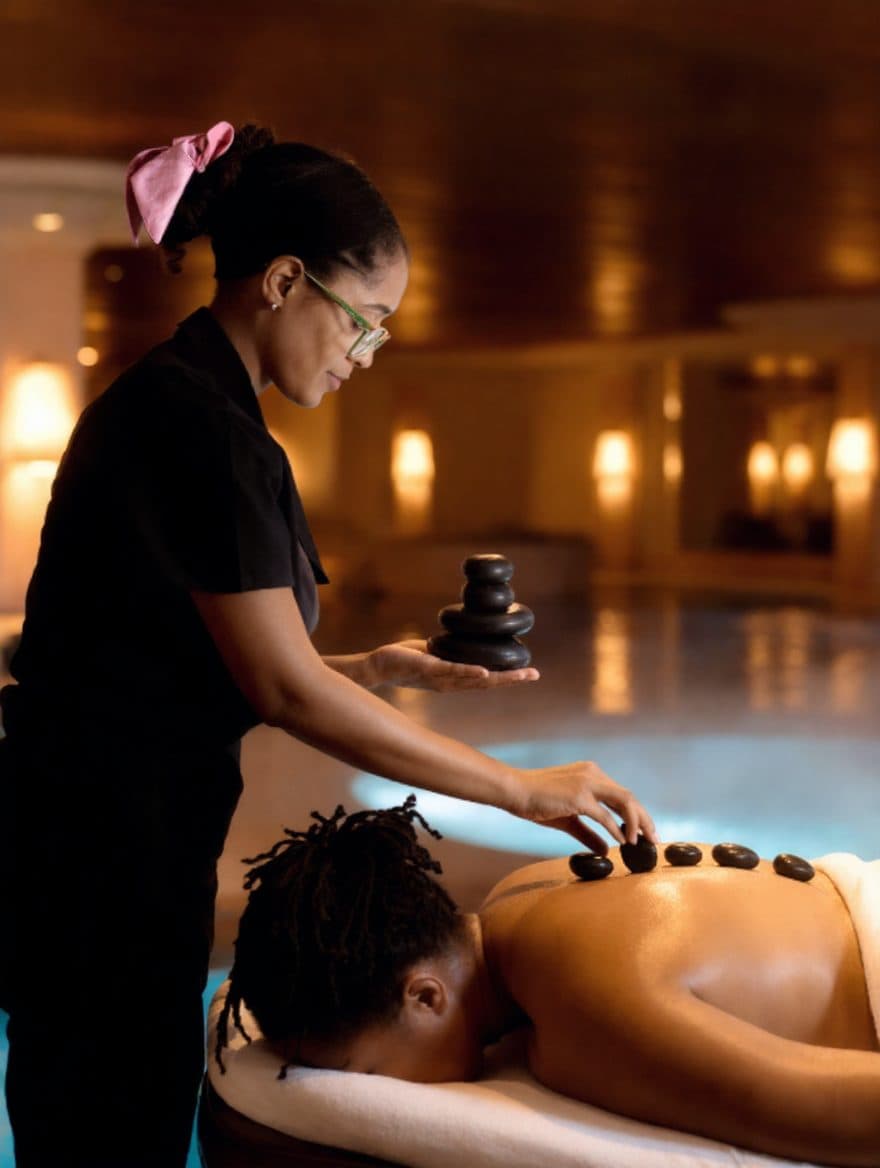
Benefits, physical and mental
Physically, the heat dilates blood vessels and increases local circulation, which helps flush tension and mild soreness faster than a massage without heat and lets your therapist ease into tight muscle without the firmer, sustained pressure that deep tissue work relies on. Guests who tend to feel cold, or who carry tension as a kind of bracing tightness rather than a specific knot, often notice the difference heat makes almost immediately.
Mentally, warmth is simply calming in a way that's hard to replicate with technique alone — it's common for guests to drift off partway through a hot stone session, more so than with other styles. The combination of heat, rhythm and touch tends to produce a deeper, more complete sense of relaxation than a single element could on its own.
How it compares to Swedish massage
Both are relaxation-focused and the underlying strokes are largely the same — hot stone is really Swedish technique with heated stones added into the mix. The difference is how the heat changes the experience: stones let your therapist work a little deeper with less pressure and the warmth itself is part of the relaxation rather than just a byproduct of touch. See our Swedish massage page if you'd rather keep things purely hands-on, which also suits sensitive or sunburned skin better than added heat would.
Guests who've had both tend to describe hot stone as the more indulgent, sensory version of the same relaxing session — worth choosing specifically for the heat, rather than for a different kind of result.
How it compares to deep tissue massage
Deep tissue uses firm, sustained pressure without heat to work through chronic, specific tension — it's a therapeutic technique first, relaxation second. Hot stone is the opposite emphasis: heat does much of the work that firm pressure would otherwise need to do, so the session stays gentler and more relaxation-forward even though the stones do reach real depth. See our deep tissue massage page, or our Swedish vs. deep tissue comparison, if you're after that firmer, more targeted style of work instead.
You can also combine the two: tell your therapist you'd like warmed stones used alongside firmer, deep-tissue-style pressure on a specific tight area and they'll adjust accordingly rather than keeping strictly to one script.
Who it suits best
Guests who run cold, who carry tension as general tightness rather than one specific knot, or who simply want the most indulgent, sensory version of a relaxation massage tend to get the most out of hot stone. It's a popular choice for a first spa day of a trip, or whenever the goal is pure unwinding rather than working through something specific.
It also suits guests who find deep tissue pressure a little too intense but still want to feel a session reach past the surface — the heat does a lot of that work without needing firm hands to get there.
Who should avoid or modify hot stone massage
Tell us before booking if you're pregnant (we offer a dedicated prenatal massage instead), have diabetes, neuropathy, or any condition that reduces skin sensation, since reduced sensitivity to heat raises the risk of a burn going unnoticed. The same applies if you have a cardiovascular condition, are on blood thinners, have varicose veins, a fever, acute inflammation, or recent sunburn, broken skin, or a rash in the area the stones would touch — heat is the wrong starting point in all of these cases and your therapist will either skip the stones for that area or recommend a different session entirely.
If you're new to hot stone specifically, the stones are always tested against your therapist's own wrist or your inner arm before they're used on you and the temperature is adjusted to what's comfortable, not a fixed standard. Speak up immediately if a stone ever feels too hot — it should feel like deep, pleasant warmth throughout, never like it's burning.
What's included, no upcharge
Foot and scalp massage is built into every session length — 30, 45, 60, 90 and 120 minutes — along with assisted stretching, which pairs easily with hot stone work since warmed, relaxed muscle stretches more comfortably. We use two oils only, cold-pressed coconut and grapeseed, with no added fragrance and the stones themselves are cleaned and reheated fresh for every session.
As with every TUTCH session, there's no separate charge for any of this — the stones, the heating equipment, foot, scalp and stretching are all part of the session you book, not an add-on your therapist upsells once they arrive.
What happens on the day: hot stone setup
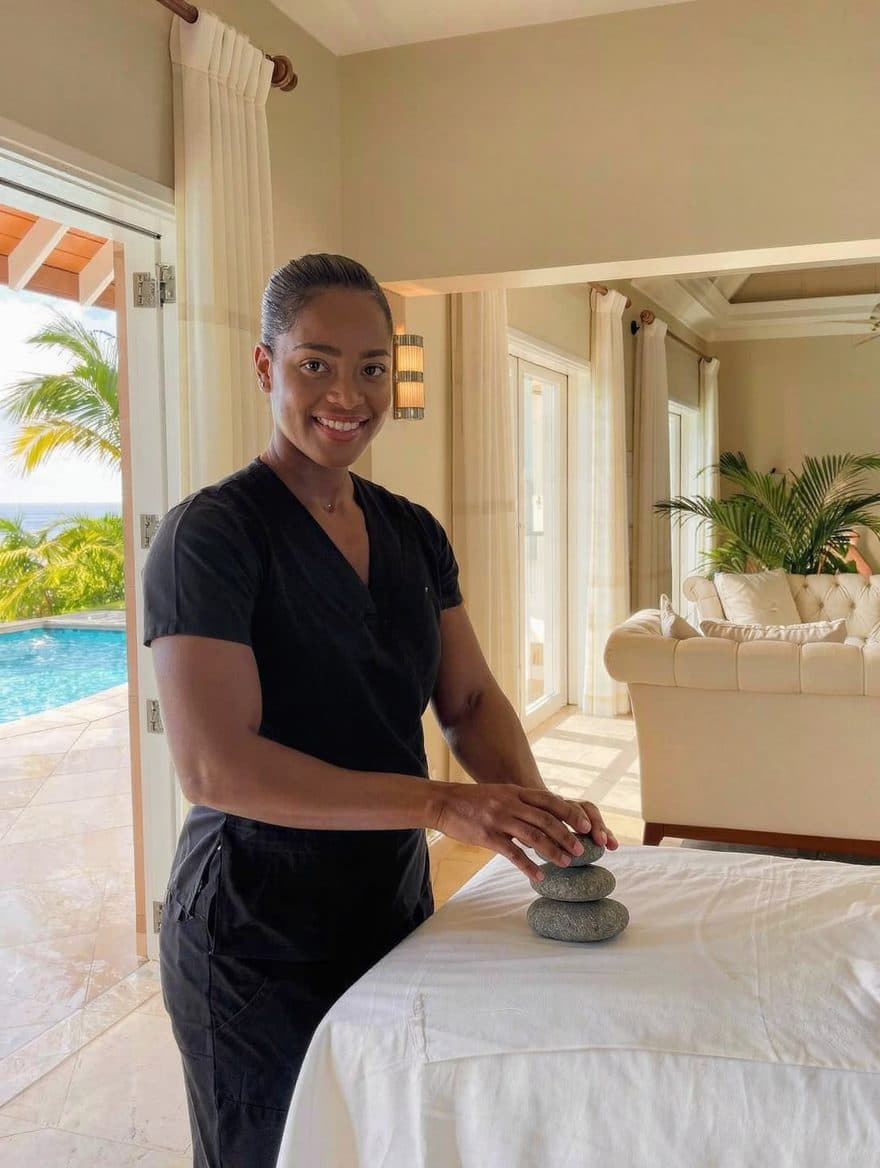
About half an hour before your start time your therapist arrives with a professional table, linens, oils, the stones themselves and a portable heating unit to keep them at a steady, controlled temperature throughout your session — nothing is heated on an open flame or anything improvised. A pre-treatment consultation covers your health history, any areas of reduced sensation and how much heat you'd like, before the first stone ever touches your skin. Sheets cover you throughout and only the section being worked on is ever uncovered.
During the session, your therapist checks in on temperature as they go and you should always feel free to ask for less heat, more heat within a safe range, or firmer pressure alongside the warmth. Afterward, take a few minutes before getting up — the warmth tends to leave guests more loose-limbed and drowsy than a massage without heat — and drink water if you're thirsty. Your therapist packs down the stones and equipment quietly within a few minutes.
How often to book
For general unwinding during a trip, one hot stone session is usually enough to deliver the deep, relaxed feeling guests are after, though plenty of guests book it again later in a longer stay purely because they enjoyed it. For ongoing tension that tends to respond well to heat — guests who run cold, or who carry stress as overall tightness — biweekly or monthly sessions as part of a regular routine can keep that looser feeling from fading between visits.
If what you're dealing with is a specific, stubborn knot rather than general tightness, deep tissue massage is usually the faster route to resolving it — hot stone can still help, but it's built around relaxation first.
Good for couples and groups too
Hot stone works well as a side-by-side couples session and it's a popular pick specifically for that setting — the shared warmth and slower pace suit a relaxed morning or afternoon together more than a firmer, more clinical style of massage would. Each person can still set their own heat and pressure independently, so one of you can ask for more warmth while the other asks for less.
It scales for larger groups too: friends' trips and family vacations often mix hot stone with Swedish or deep tissue sessions back to back, depending on who's after the most relaxing option and who wants firmer, more targeted work. Let us know your group size and preferred timing when you book and we'll schedule therapists so nobody is rushed.
Why book hot stone massage with TUTCH
Our team has worked across Barbados since 2009 under an iTEC (UK) Certified Manager with more than 1,000 five-star reviews to show for it. Hot stone work carries a real safety dimension that a purely hands-on massage doesn't — stones need to be heated, tested and monitored correctly to stay relaxing rather than risky — and every TUTCH therapist is trained to the same heating and testing protocol, whether you're booking through our full massage menu or this page directly.
You pay one price wherever you are on the island. Distance from town adds nothing and everything is already set up when your therapist arrives.
Booking
Choose your session length through our online menu or message us on WhatsApp with your dates, property and anything we should know before your therapist arrives with the stones and heating equipment. Your slot is secured once full payment is made in advance.
Frequently asked questions
Is hot stone massage safe for everyone?+
Not quite everyone — tell us if you're pregnant, have diabetes or neuropathy, a cardiovascular condition, are on blood thinners, or have varicose veins, a fever, or broken or sunburned skin. We'll either adjust the session or recommend a different one instead.
How hot are the stones?+
Warm enough to feel like deep, soothing heat, never hot enough to feel like it's burning. Every stone is tested against your therapist's own skin before it touches you and the temperature is adjusted to what you find comfortable.
Will I get burned?+
It's very unlikely with a properly trained therapist — stones are tested before use and checked throughout the session. The real risk factor is reduced skin sensation, which is why we ask about diabetes, neuropathy and similar conditions before booking.
How is this different from Swedish massage?+
Hot stone is largely the same hands-on technique as Swedish massage, with warmed basalt stones added in. The stones let your therapist work a little deeper with less pressure and the heat itself adds to the relaxation.
How is this different from deep tissue massage?+
Deep tissue uses firm, sustained pressure without heat to work through specific, chronic tension. Hot stone leans on warmth rather than firm pressure, so it stays gentler and more relaxation-focused even though it still reaches real depth.
Can I ask for less heat, or firmer pressure alongside the warmth?+
Yes to both. Tell your therapist during the pre-treatment consultation or at any point during the session and they'll adjust the stone temperature or add firmer, deep-tissue-style pressure on request.
Is hot stone massage safe during pregnancy?+
We recommend our dedicated prenatal massage instead, which is positioned and paced specifically for pregnancy. Let us know if you're pregnant when you book and we'll arrange that instead.
Do you bring everything needed, including the stones and a way to heat them?+
Yes. Your therapist arrives with a professional table, linens, oils, the stones and a portable heating unit and sets up fully in your space roughly thirty minutes before your session starts.
Is it available for couples, with each person choosing their own heat and pressure?+
Yes — in a side-by-side couples session, each person's temperature and pressure are set independently, so one of you can ask for more warmth while the other asks for less.
How often should I book hot stone massage?+
One session is usually enough for general unwinding during a trip. For ongoing tension that responds well to heat, biweekly or monthly sessions as part of a routine tend to keep that relaxed feeling from fading.
What if I have sensitive skin, diabetes, or reduced sensation somewhere on my body?+
Mention it during booking or the pre-treatment consultation. Your therapist will test stones carefully against your own skin first and can skip the stones entirely on any area where sensation is reduced, working that area by hand instead.
Barbados Mobile Spa
Ready for Your Spa Experience?
Book your at-home spa treatment in Barbados today. We come to you — villa, hotel, condo, Airbnb or private residence island-wide.
Call: 1.246.850.0901·8am – 9pm, Sunday to Saturday